Conservation
Conservation means protecting and regenerating the lands, waters, wildlife, and natural systems that tourism depends on by respecting ecological limits, managing visitor activity, and making decisions that reduce harm and support long-term ecosystem health.
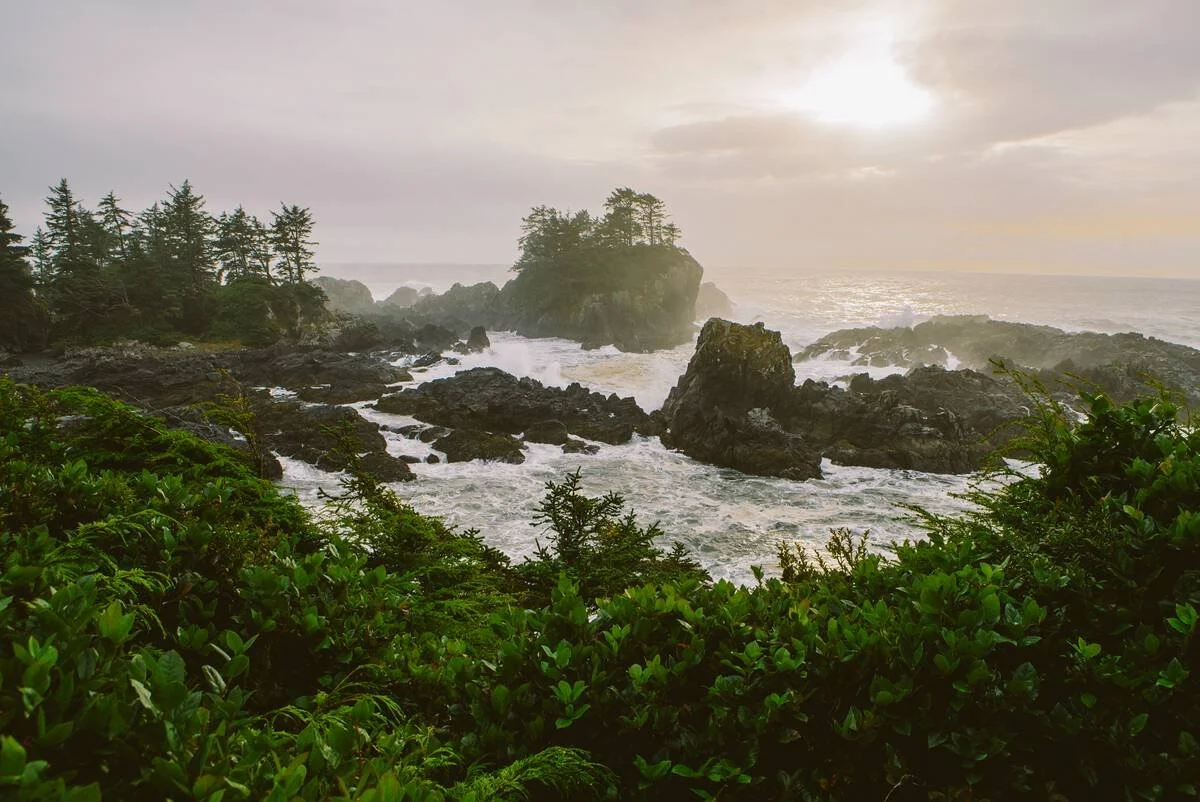
We protect and regenerate the natural places we love now, and for future generations.
Conservation is the ecological logic of the CARE Framework and the foundation of the Vancouver Island Region’s competitive advantage as a destination. The coastlines, ancient forests, marine ecosystems, and living watersheds of this Island are not incidental to the visitor economy. They are the visitor economy. Conservation in CARE asks operators and destination managers to treat ecological health not as a constraint on tourism, but as the asset that must be actively protected, invested in, and restored if the industry is to remain viable and credible over the long term.
The good news is that the market is already moving in this direction. Visitors increasingly seek destinations that align with their values, and the data from our own communities confirms they are ready to be partners in conservation, not just beneficiaries of it.
Consider: What would you do differently tomorrow if you treated the places you work and live as something you are responsible for, not just a location where you operate?
Scroll down to read the Conservation Practices you can take today, and learn about the initiatives 4TVI is leading.
“We come here because it still feels wild. Please help us keep it that way.”
-4TVI What we Heard Report
Conservation Practices, Tools, and Resources
Practice 1: Conservation Activity and Impact Audit
START HERE!
Practice Description: Create a list of activities, tours, experiences, and/or operations you currently lead or have influence on and use the Conservation Activity Impact Audit to score current tourism activities' positive and negative impacts on the natural environment. Consider energy use, water, waste, and impact on habitat and local culture. Based on the findings, identify at least one small shift you can make to reduce harm or boost benefit, for example: a 2-minute invasive species removal, a water conservation practice, or planting native or pollinator species where you work.
-
62% of Vancouver Island residents contribute to their community by 'reducing environmental impact (e.g., waste reduction, active transportation)' and residents expect visitors to step into this same ethos. (DSS WWH Report, Sec. 2.3)
Malahat participants called out 'environmental impacts, such as disrespect for the land, overcrowding, and dirty spaces' as top disruptions from tourism. (Malahat FN Community Survey)
Visitors were asked to 'leave places cleaner or as clean as they are found, shop local' and to 'join stewardship, tree planting and donate to stewardship infrastructure.' (Malahat FN Community Survey)
The Situation Analysis talks about 'cumulative impacts, in other words, the combined effect of many small changes over time that together create significant environmental pressure. Small operator actions matter at scale. (DSS Situation Analysis, Key Terms)
-
Conservation Activity Audit
-
Low-Impact Operations Incentive Program: Developsmall grants, marketing benefits, or priority in campaigns for operators meeting regenerative / low-impact criteria. The criteria could include water conservation, regenerative actions, local procurement, wildlife protection, etc.
-
SDG 12: Responsible Consumption & Production
SDG 14: Life Below Water
SDG 15: Life on Land
Practice 2: Seasonal Pause and Reflect
BEGINNER PRACTICES
Practice Description: Before making decisions, big or small, pause and reflect on your relationship with the land, the people, and the place you operate in. Use the template provided to consider the natural environment your business depends on, reflect on what you are hearing in this season, and brainstorm small changes you can make to be more aligned with the natural environment. By building this awareness and reflecting on it, our choices become more intentional, rooted in responsibility, foresight, and care.
-
Indigenous worldviews across Vancouver Island consistently hold that stewardship is not a discrete activity but an ongoing, relational responsibility, "carried through relationships, reciprocity, and care for future generations." The practice of pausing to reflect on your relationship with place is not a new concept; it is foundational to how the peoples of this land have managed it since time immemorial. (DSS Situation Analysis, Ch. 1 & Ch. 2.1)
Malahat First Nation community members described what good tourism looks like in seasonal terms: respecting when places and species need rest, managing when and how visitors access land, and adjusting behaviour based on what the land and community are telling you in a given season. (Malahat FN Community Survey)
Tourism on Vancouver Island is described as "operating close to, or beyond, its social and ecological limits in some locations." Without regular reflection and course-correction, businesses contribute to cumulative harm without ever making a single large, visible decision. (DSS Situation Analysis, Executive Summary & Key Terms)
'Ecological Thresholds' are defined as "a small change in an environmental condition that causes a sudden, large, and often irreversible shift in an ecosystem's quality, structure, or function." Operators who are not pausing to observe and respond to seasonal conditions in real time may make choices that don't consider the influence of the environment on their products, potentially resulting in losses. (DSS Situation Analysis, Key Terms)
Vancouver Island residents are already active caretakers of this place, 62% personally reduce their environmental impact as part of how they live here. They want visitors and operators to step into that same ethos of active, seasonal care. (DSS WWH Report, Sec. 2.3)
Indigenous Pathways Conference participants grounded all of their work in an ongoing, living relationship with the land, not a fixed set of rules but a practice of continuous listening and response. Samantha Pelkey (Traditional Tides Adventures) structures her entire guest experience around this relationship, and participants described their motivation as ensuring "future generations will thrive." (Indigenous Pathways Conference Report)
-
Pause and Reflect Template
-
Shift the Destination Narrative: 4TVI influences the destination story at the regional level. Shifting 4TVI’s campaigns away from solely volume, discovery, and peak-season language toward relationship, reciprocity, seasonality, and slow travel sets the tone for the whole industry. This is something operators cannot do unilaterally and needs to be supported by the regional voice.
-
SDG 13: Climate Action
SDG 15: Life on Land
SDG 16: Peace, Justice & Strong Institutions
Practice 3: Ground Your Work in Place
Practice Description: Learn about where you are living and working. If you don't already know what a land acknowledgement learn what it is and how to do one. Make a practice of beginning meetings, activities, or tour experiences with a land acknowledgement, personal or community reflection or story. Rotate who leads it and whose stories are shared. Remember, a land acknowledgement is a starting point, not the destination.
-
The Vancouver Island Region is home to more than 50 First Nations communities belonging to three distinct cultural families, the Coast Salish, Nuu-chah-nulth, and Kwakwaka'wakw, each with unique cultures, governance systems, languages, and relationships to land and water that have existed since time immemorial. (DSS Situation Analysis, Ch. 2.1)
Land acknowledgements represent an important starting point in recognizing these relationships; however, deeper learning, collaboration, self-reflection, and stewardship practices are essential to the long-term care of place. (DSS Situation Analysis, Ch. 2.2)
One participant identified that they 'integrate land acknowledgment teachings and protocols for cruise ship guests as central to their business offering', demonstrating that it can be built directly into tourism experiences. (Indigenous Pathways Conference Report)
Malahat First Nation survey participants expressed the need for visitors to be 'acknowledging the lands they are within' and 'respecting native lands.' (Malahat FN Community Survey)
-
Meaningful Land Acknowledgement Guide. Tourism Cares.
Doing a Territory Acknowledgement: How and Why. University of Victoria.
Understanding and Creating a Land Acknowledgment. University of British Columbia
-
SDG 4: Quality Education
SDG 10: Reduced Inequalities
SDG 16: Peace, Justice & Strong Institutions
Practice 4: Think Long Term
INTERMEDIATE PRACTICES
Practice Description: Ask yourself and your team: 'What happens to the natural environment in this place if this activity continues for 10, 20, 50 years or longer?' It doesn't have to be a perfect answer, but the practice of asking matters. This builds a culture of long-term ecological thinking within your organization.
*Aligned with Agency Practice: Plan for Future Generations
-
DSS Situation Analysis: 'Stewardship isn't seasonal, it's generational. By embedding regeneration into destination planning, we can support the long-term health of our economies, ecosystems, and communities.' (Ch. 3.2)
Literature review: 'Some ecosystem and cultural restorations take centuries...Tourism must respect natural and cultural timelines, rather than expecting quick fixes for economic or environmental damage.' (DSS Situation Analysis, Ch. 4.1)
DSS Situation Analysis: Tourism is 'operating close to, or beyond, its social and ecological limits in some locations' on Vancouver Island. (Executive Summary)
DSS WWH Key Insights: 'We need to focus on regeneration over expansion, how can economic development support the community without leading to overwhelming growth?' (DSS WWH Report)
'Ecological Thresholds': Defined in the Situation Analysis as 'a small change in an environmental condition that causes a sudden, large, and often irreversible shift in an ecosystem's quality, structure, or function.' (DSS Situation Analysis, Key Terms)
Land acknowledgements represent an important starting point in recognizing these relationships; however, deeper learning, collaboration, self-reflection, and stewardship practices are essential to the long-term care of place. (DSS Situation Analysis, Ch. 2.2)
One participant identified that they 'integrate land acknowledgment teachings and protocols for cruise ship guests as central to their business offering', demonstrating that it can be built directly into tourism experiences. (Indigenous Pathways Conference Report)
Malahat First Nation survey participants expressed the need for visitors to be 'acknowledging the lands they are within' and 'respecting native lands.' (Malahat FN Community Survey)
-
Six Ways to Think Long-term: A Cognitive Toolkit for Good Ancestors. The Long Now Foundation
Seven Generations Principle: Healing the Past & Shaping the Future. The Indigenous Foundation
-
SDG 11: Sustainable Cities & Communities
SDG 13: Climate Action
SDG 15: Life on Land
Practice 5: Identify and Communicate Seasonal & Ecological Truths
Practice Description: Identify 3–5 ecological and seasonal realities about the natural environment your business depends on, its history, climate vulnerabilities, species sensitivities, spawning and nesting periods, fire and flood seasons, and growth limits. Use this knowledge in two ways: first, adjust your own operations to respect these realities (e.g., group sizes, access timing, water use, seasonal closures); and second, weave what you know into your marketing, tours, social media, and guest communications so that visitors understand the place they're entering and how to move through it with care.
-
Vancouver Island generates approximately 2 million tonnes of GHG emissions annually (2019 baseline), with climate change already threatening marine ecosystems, freshwater systems, and old-growth forests that underpin tourism's core appeal (DSS Situation Analysis, Ch. 2.3)
Climate hazards, including wildfire risk, drought, sea level rise, and ocean acidification, are recognized as operational threats in all 22 destination plans reviewed across Vancouver Island (DSS, Ch. 4.2)
80% of travellers report willingness to pay more for sustainable travel experiences, and visitor education has been identified as a lever for shifting guest behaviour at the destination level (DSS What We Heard Key Insights)
22 Vancouver Island tourism plans recommend implementing visitor education programs as part of destination stewardship (DSS, Ch. 4.2)
The DSS Scales of Reciprocal Contributions (Ch. 3.1) position ecological awareness as an individual-level action that, when practiced consistently across operators, compounds into collective and system-level impact.
Seasonal sensitivity examples from Vancouver Island operators include Malahat whale tour operators pausing near river mouths during salmon runs, and river-based guides adjusting entry points based on low-water conditions — guest communication transformed these into stewardship stories rather than service limitations. WWH Key Insights identify seasonal load management as an underdeveloped strategy in VI tourism, with front-line staff and guides as the most trusted communicators of ecological context to visitors. (DSS What We Heard)
-
Seasonal Environmental Calendar & Visitor Guide: A visual calendar that shows wildlife periods (nesting, spawning), water stress months, and cultural or community considerations or events by season. It could include behavioural tips, region-specific variations, and social media templates.
Climate & Conservation Decision Checklist: A checklist for operators, destination management organizations, and local governments to use before developing new projects and making investments. The checklist will help users consider the impacts of their project on emissions and energy, ecosystem health, water and waste, community and economic benefits, long-term resilience and regeneration potential.
-
How Destination Marketing Can Attract Responsible Travellers and Support Local Conservation. Marissa Volkman
Educational briefings in touristic facilities promote tourist sutainable behavior and customer loyalty. Journal of Biological Conservation
-
SDG 4: Quality Education
SDG 13: Climate Action
SDG 15: Life on Land
Practice 6: Build a Culture of Capacity Awareness
Practice Description: Start thinking about the carrying capacity limits of your region and where you work: group sizes, distances to maintain, access points, and resource use. Build a team culture that understands what these limits mean. Ask: Where might additional limits be needed to preserve dark skies, protect species, reduce water use, or prevent trampling? Document and communicate these limits to guests.
-
DSS WWH Key Insights: 'Consider visitor capacity guidance, seasonal load strategies, quiet zone protection areas, regenerative infrastructure tied to visitor use, tools like a community carrying capacity comfort index, peak pressure heat maps.' (DSS WWH Report)
Over-tourism and carrying capacity are significant issues across VI: 'Many communities are shifting from growth-based tourism to a destination management lens that prioritizes balance.' (DSS Situation Analysis, Ch. 4.2)
Analysis of 22 VI tourism plans: 'In peak seasons, congestion, day-tripper volumes, and pressure on community infrastructure are significant issues.' (DSS Situation Analysis, Ch. 4.2)
One operator limits her groups to a maximum of 18 guests per experience as a deliberate quality and ecological protection strategy. (Indigenous Pathways Conference Report)
Malahat survey: Respondents called for 'limiting the number of people at a certain time, educating tourists on being respectful of land use.' (Malahat FN Community Survey)
55% of VI residents feel visitor volumes are 'just right,' but 24% feel there are too many, indicating approaching thresholds in some areas. (DSS WWH Report, Sec. 2.4)
-
Carrying Capacity Calculation Template: Right now, operators have no shared reference point for where thresholds are being crossed. 4TVI can commission and maintain a living regional ecological pressure and carrying capacity framework, including seasonal hotspot pressure maps, known ecological limits, and make this information available to CDMOs and operators. The template would be a practical way to determine how many visitors natural areas and/or destinations can handle by considering size, ecological sensitivity, infrastructure limits, community tolerance, etc.
-
-
SDG 11: Sustainable Cities & Communities
SDG 14: Life Below Water
SDG 15: Life on Land
Practice 7: Learn about the Indigenous Guardian Programs
Practice Description: Learn about the Indigenous Guardian Programs operating in your area. These Guardians are the eyes and ears of the land and sea, monitoring wildlife, protecting cultural sites, and developing tourism protocols. Consider how your business could support, partner with, or formally acknowledge their work in appropriate and relevant ways.
-
Indigenous Guardian Programs across VI (K'ómoks in Comox Valley, Tlowitsis in Northern Vancouver Island) conduct wildlife monitoring, salmon hatchery work, shellfish sampling, cultural site protection, and 'development of tourism protocols and agreements with non-Indigenous operators.' (DSS Situation Analysis, Ch. 2.3)
In 2014, Central Coast First Nations declared Dungeness crab closures under Indigenous law. Guardians communicated directly with fishers, resulting in high voluntary adherence and scientifically documented increases in crab numbers and body size. (DSS Situation Analysis, Ch. 2.3)
Robert Mountain (Nagmis First Nation, Alert Bay) references the Tribal Parks Alliance and First Nations Guardian Fund as models for community land protection. Tourism operators are encouraged to align with these systems. (Indigenous Pathways Conference Report)
-
Indigenous Guardians Toolkit. Nature United
Indigenous Guardians Map. Government of Canada
-
SDG 14: Life Below Water
SDG 15: Life on Land
SDG 16: Peace, Justice & Strong Institutions
SDG 17: Partnerships for the Goals
Practice 8: Turn Experiences into Stewardship Action
ADVANCED PRACTICES
Practice Description: Partner with organizations or weave activities that support conservation, volunteerism, and learning into your offerings, such as beach or trail clean-ups, invasive species pulls, and species planting. Reach out to a local conservation group and identify where there is a community need, and consider how your business can support or lead volunteers. Identify where collaboration with nearby operators or DMOs could share resources or solutions.
-
67% of VI residents believe visitors should play an active role in giving back and 'directly contributing to community well-being (e.g., volunteering, tree planting)' was a top suggestion. (DSS WWH Report, Sec. 2.3)
Indigenous Pathways Conference: participants advocated for 'regenerative tourism that gives back, socially, culturally, economically, and environmentally.' (Indigenous Pathways Conference Report)
DSS WWH Key Insights: 'Give back while you visit programs (trail days, beach clean-ups), visitor donation options embedded in booking flows, round-up donations, stewardship passes.' (DSS WWH Report)
Indigenous Guardian Programs (K'ómoks, Tlowitsis) demonstrate powerful models of local conservation partnerships: activities include wildlife monitoring, salmon hatchery work, medicinal plant inventories, shellfish sampling, and cultural site protection. Tourism operators can support and connect with these programs. (DSS Situation Analysis, Ch. 2.3)
DSS Situation Analysis recommends 'collective & operational contributions' for tourism operators including: 'design experiences that protect, not pressure, ecosystems; adjust operations based on seasonal and ecological conditions; partner with Indigenous Nations and local communities in tourism planning.' (Ch. 3.1)
Malahat survey: Visitors suggested 'tree planting, reconciliation initiatives and caring for mother earth.' (Malahat FN Community Survey)
In 2014, Central Coast First Nations declared Dungeness crab closures under Indigenous law. Guardians communicated directly with fishers, resulting in high voluntary adherence and scientifically documented increases in crab numbers and body size. (DSS Situation Analysis, Ch. 2.3)
Robert Mountain (Nagmis First Nation, Alert Bay) references the Tribal Parks Alliance and First Nations Guardian Fund as models for community land protection. Tourism operators are encouraged to align with these systems. (Indigenous Pathways Conference Report)
-
Beach Cleanups. Surfrider Foundation
Shoreline Cleanups on Vancouver Island. Surfrider Foundation Canada and Prince of Whales
-
SDG 11: Sustainable Cities & Communities
SDG 14: Life Below Water
SDG 15: Life on Land
SDG 17: Partnerships for the Goals
Practice Description: Design your pricing or booking flow to include a small, transparent stewardship contribution, like a round-up donation option, a flat trail fund fee, or a per-booking contribution to a local conservation, economic development, or stewardship fund. Be transparent about where funds go and who benefits. This is a system-level practice that requires trust, clarity, and follow-through.
*Note this practice shows up in the Conservation and Reciprocity practice.
Practice 9: Embed Stewardship in Pricing or Booking
-
~77% of VI visitors are willing to pay a small sustainability fee. A 'small, well-communicated contribution can finance systems that support stewardship, quality of life, and visitor experience.' (DSS WWH Report, Sec. 1.5)
DSS WWH Key Insights recommend 'visitor donation options embedded in booking flows, round-up donations, stewardship passes' as practical, scalable tools for community reciprocity. (DSS WWH Report)
'Embed reciprocity into pricing or offerings (e.g., stewardship contributions)' — listed at the Collective /Operational level in the DSS Scales of Reciprocal Contributions (Figure 3). This practice transforms the gift mindset into a structural mechanism. (DSS Situation Analysis, Ch. 3.1)
Tla-o-qui-aht Nation's '10 plus 10' plan, recapturing 10% of Tofino's $500M annual tourism economy for Indigenous communities over 10 years, represents the system-shift potential when give-back mechanisms are scaled. (Indigenous Pathways Conference Report)
Malahat FN participants called for 'mandatory financial contributions to maintain and facilitate future activities.' (Malahat FN Community Survey)
-
Regional Visitor Stewardship Contribution Fund: 77% of visitors are willing to pay a sustainability fee (between $5 - $10). Operators doing this individually are fragmented, administratively burdensome, and invisible at scale. 4TVI can create a regional give-back mechanism, a stewardship pass, a round-up fund integrated with booking platforms, or an MRDT-aligned community fund, and direct it back to communities to make decisions on transparent and visible stewardship outcomes, like ecosystem restoration, conservation projects, community events, and climate resilience.
-
SDG 11: Sustainable Cities & Communities
SDG 15: Life on Land
SDG 17: Partnerships for the Goals