Beyond Sustainability, Towards Reciprocity
KACIA TOLSMA, MRM, RPP, MCIP | DIRECTOR, SUSTAINABILITY & PLANNING
Kacia is a planner and climate strategist working at the intersection of tourism, climate action, and systems change. She leads place-based initiatives that challenge extractive models of tourism and advance more reciprocal, climate-informed approaches across Vancouver Island.Every Earth Day, the tourism industry recommits to sustainability through discussions on reducing emissions, minimizing waste, and protecting natural areas. These are important actions, but they don’t help us deconstruct the extractive system we exist with. Instead of asking how we can continue to sustain our current, extractive system, we need to ask different questions, like what do we owe to the places, communities, and ecosystems that tourism depends on, and how do we give back more to them than we take?
Sustainability has helped move the tourism industry forward. It has reduced impacts and provided the tools, metrics, and language needed to begin acting. At its core, however, sustainability focuses on minimizing negative impacts within existing systems, and that is where its limits begin to show. Even within a sustainability framework, tourism remains fundamentally extractive. We see this in emissions from travel, waste from single-use materials, the growing pressures placed on local water, infrastructure, and energy systems, and in social extraction through cultural degradation and seasonality. When we focus only on reducing harm, continued extraction is normalized. Communities are expected to absorb the pressures of visitation on their infrastructure, housing, and everyday spaces. Ecosystems are exposed to increased use and left to recover on their own, and economic benefits are not always reinvested locally or distributed in proportion to what is taken. The result is a system that may sustain tourism, but not the places it depends on.
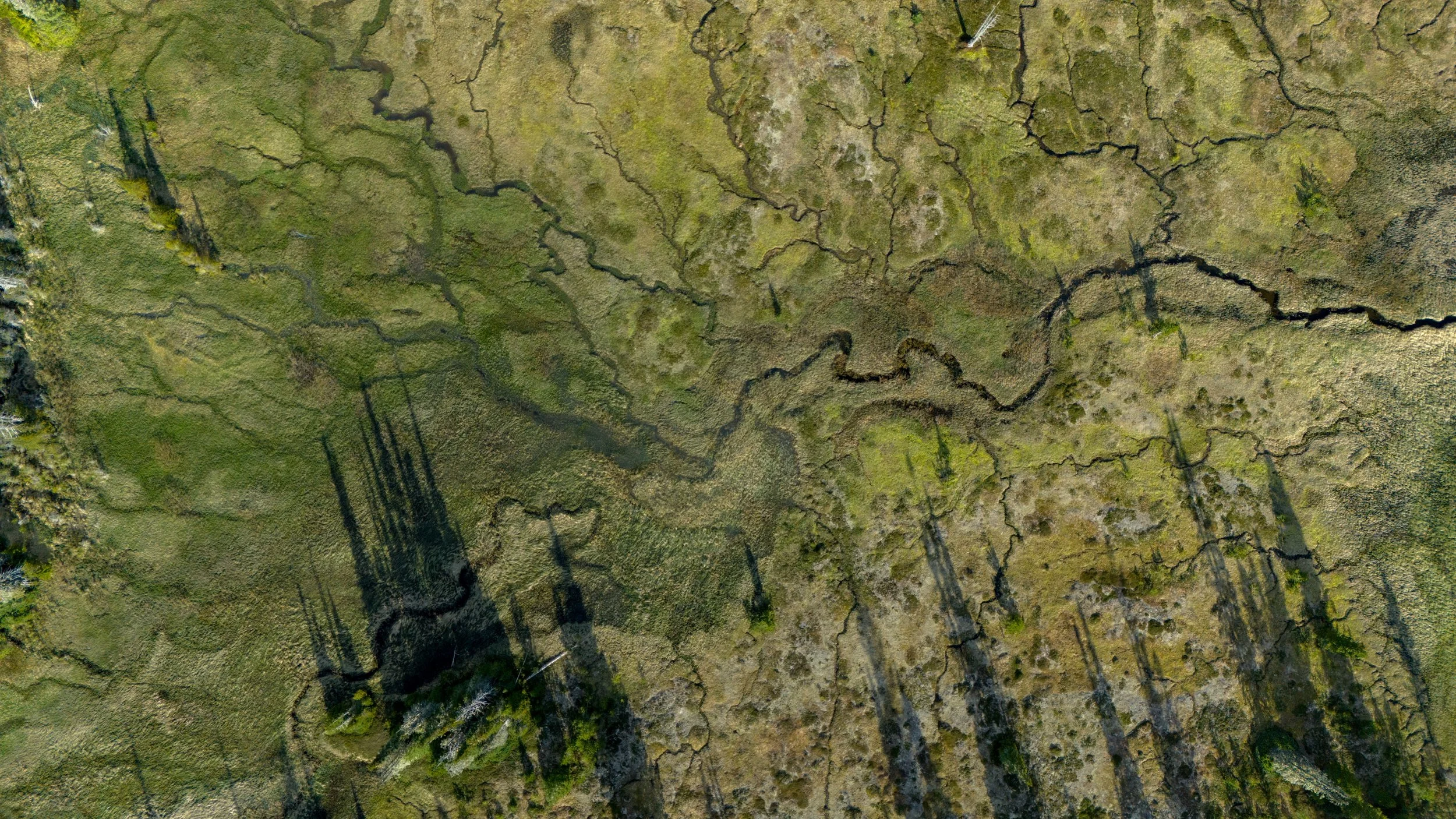
Regenerative tourism offers a necessary shift grounded in reciprocity. It moves beyond minimizing harm to transforming the system itself, reframing tourism as a force that contributes to the health of people, places, and ecosystems. Sustainable tourism focuses on maintaining current systems while regeneration asks us to rethink them entirely, shifting from linear, extractive models toward circular systems where travel and tourism gives back more than it takes and strengthens communities and environments over time.
Reciprocity anchors this transformation. It roots tourism in relationships with place, with community, and with the living systems that sustain them. This concept is not new. It is embedded in the laws, practices, and worldviews of many Indigenous Nations and grounded in the understanding that humans are part of an interconnected and interdependent system built with responsibility, balance, and ongoing care. While regenerative tourism reflects similar principles, Indigenous practices of reciprocity long predate the tourism sector’s recent adoption of this language.
The shift towards regeneration reflects a growing expectation. In the summer of 2025, 4TVI and 4EVER surveyed residents and visitors across Vancouver Island to understand what destination stewardship should look like in practice. Residents expressed a strong sense of responsibility for their communities, with 78% saying contributing to their community is very or extremely important. At the same time, 83% of residents believe visitors should play an active role in giving back to the places they visit, signalling clear support for a more reciprocal model of tourism. This tells us that residents don’t dislike or reject tourism, they just want tourism that contributes more than it takes, and our research shows many visitors are ready.
“Seventy-eight percent of residents say contributing to their community is very or extremely important, and 83% of residents believe visitors should play an active role in giving back to the places they visit.”

Seventy-eight percent of visitors indicated they would be willing to pay a small fee to support local communities and the environment, and over 50% say environmental and community considerations are an important part of their travel decisions. Visitors are already demonstrating this in practice: 87% support local businesses, 79% are willing to travel in off-peak seasons to reduce overtourism, and 71% report making conscious choices to reduce their impact. Many are actively seeking experiences that connect them more deeply to place, including conservation-focused activities, low-impact outdoor recreation, and opportunities to learn from local communities.
The alignment of values between residents and visitors signals a rare moment of consensus. The focus must move beyond proving the need for a regenerative tourism model to building the systems that make it possible.
Through our work, we are responding to this moment by drafting a destination stewardship framework for Vancouver Island: the CARE Framework. It is designed to help those working in tourism translate reciprocity into daily decisions and tangible actions, moving from intention to action.
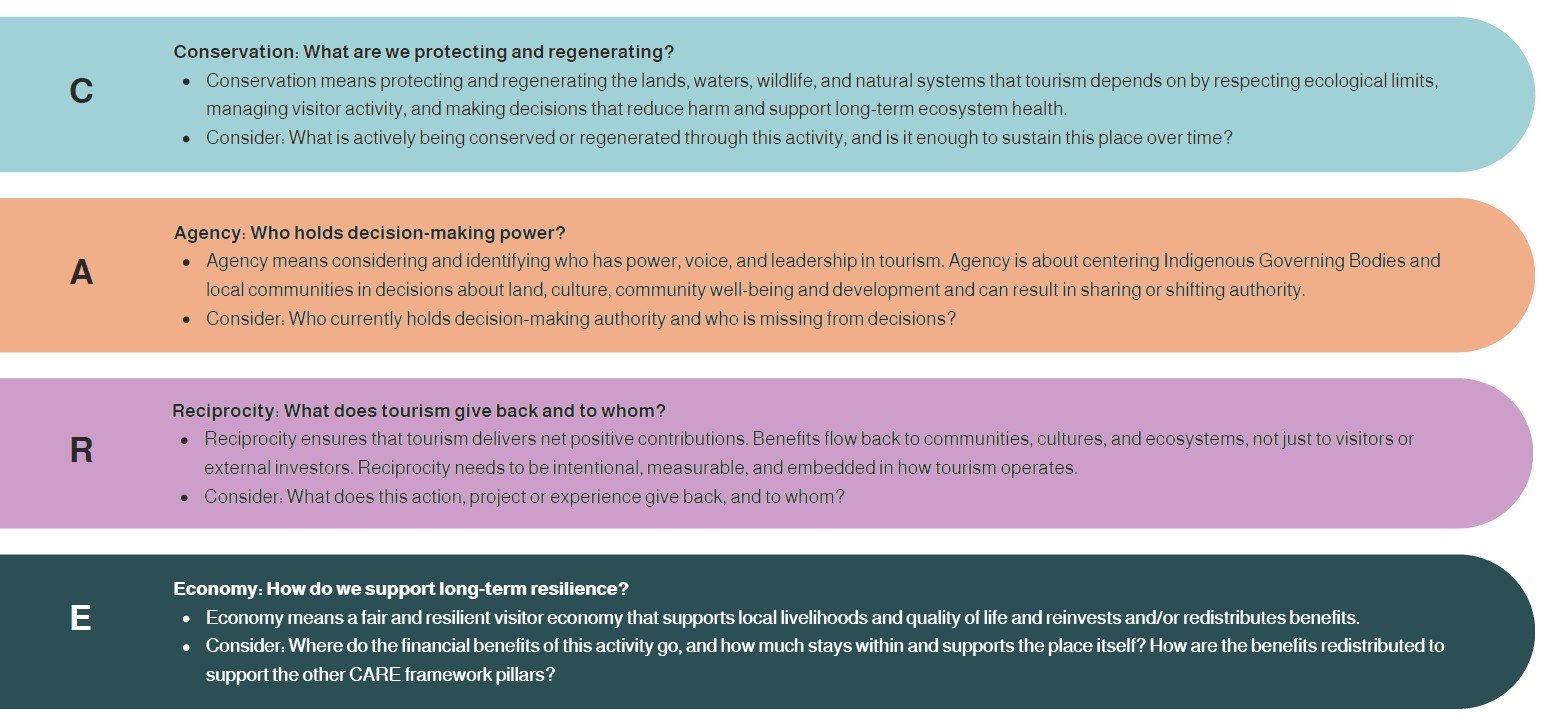
The CARE framework challenges the assumptions of the tourism system and asks all of us who work in the tourism industry to reconsider our business models, governance structures, and beliefs about growth. Tourism may start to look different, but if reciprocity feels uncomfortable, we need to think about why. What are we protecting? Profit margins? Control? Convenience? What don’t we want to change, and why?
If a system only works when it extracts, then it is the system that needs to change. Untethered growth is incompatible with finite ecological and social limits. We can’t reduce tourism’s footprint while continuing to define success through expansion; instead, we need to rethink what success actually means. What if tourism’s greatest achievement wasn’t how many visitors it attracts, but how strong it leaves the places they visit? That shift calls for measuring success through resilience, reciprocal relationships, and the long-term well-being of communities and ecosystems.
Further, let’s ask ourselves if we are ready to contribute to an industry that can prove what change looks like. One that moves beyond the ease of incremental improvement towards the complexity of transformation. From a system that is satisfied with taking less towards a system that is serious about giving back to the places, communities, and ecosystems it benefits from.
*The draft CARE Framework is currently in the final stages of review and development. We welcome those interested in learning more about the framework to join us on April 2, 2026 at noon for an information session. Please register here.