
Women, Tourism and Regeneration: Architects of Relational Infrastructure
GENEVIEVE HUNEAULT, MA | DIRECTOR, TOURISM DEVELOPMENT
Genevieve is a regenerative tourism strategist with expertise in community engagement, gender equity, and sustainable development. She leads place-based initiatives that foster destination stewardship, Indigenous collaboration, and long-term resilience across communities on Vancouver Island.Women are powerful beings who hold the ability to connect across dimensions of experience. Stay with me… From cellular creation to intuition, from ancestral memory to future imagining, women carry a positionality that moves between worlds. Across cultures and histories, this has been named and embodied in many contexts: goddess, life-bearer, witch, siren, healer, protector, leader. These archetypes remind us that women have long been understood as carriers of continuity and transformation, yet this power is rarely celebrated in its fullness, or dare I say talked about enough in our social spheres and networks. Yet, we feel it.
Instead, recognition often arrives through structures shaped by patriarchy and neocolonial capitalism. We celebrate women (particularly women in corporate) through awards and metrics of success that mirror dominant systems: revenue generated, influence accumulated, markets expanded. Tourism is not an exception, we highlight the women who grow businesses, lead organizations, or shape policy, and do not get me wrong, these are meaningful achievements worth acknowledging. But what would it look like if we widened the frame of success and recognition of women who work within the tourism ecosystem?
Further, What if we celebrated the less visible and unspoken labor that women contribute to sustain destinations? The emotional intelligence that resolves conflict before it escalates, the listening that holds communities together, the patience that allows reconciliation and reciprocity to unfold, and the intuition that senses ecological thresholds before they are breached?
Through an intersectional lens, women are not only leaders within tourism systems, they are architects of relational infrastructure. They build trust networks. They hold cultural memories. They translate between generations. They connect land, story, and economy in ways that are rarely captured in a KPI. This is the force not yet mainstreamed into our tourism conversations, and I am here for it!
This article is a thought piece that explores women's contributions to leadership and tourism and how, in my opinion, they are integral to the definition and practice of regeneration within the tourism landscape.
“Through an intersectional lens, women are not only leaders within tourism systems, they are architects of relational infrastructure. They build trust networks. They hold cultural memories.”
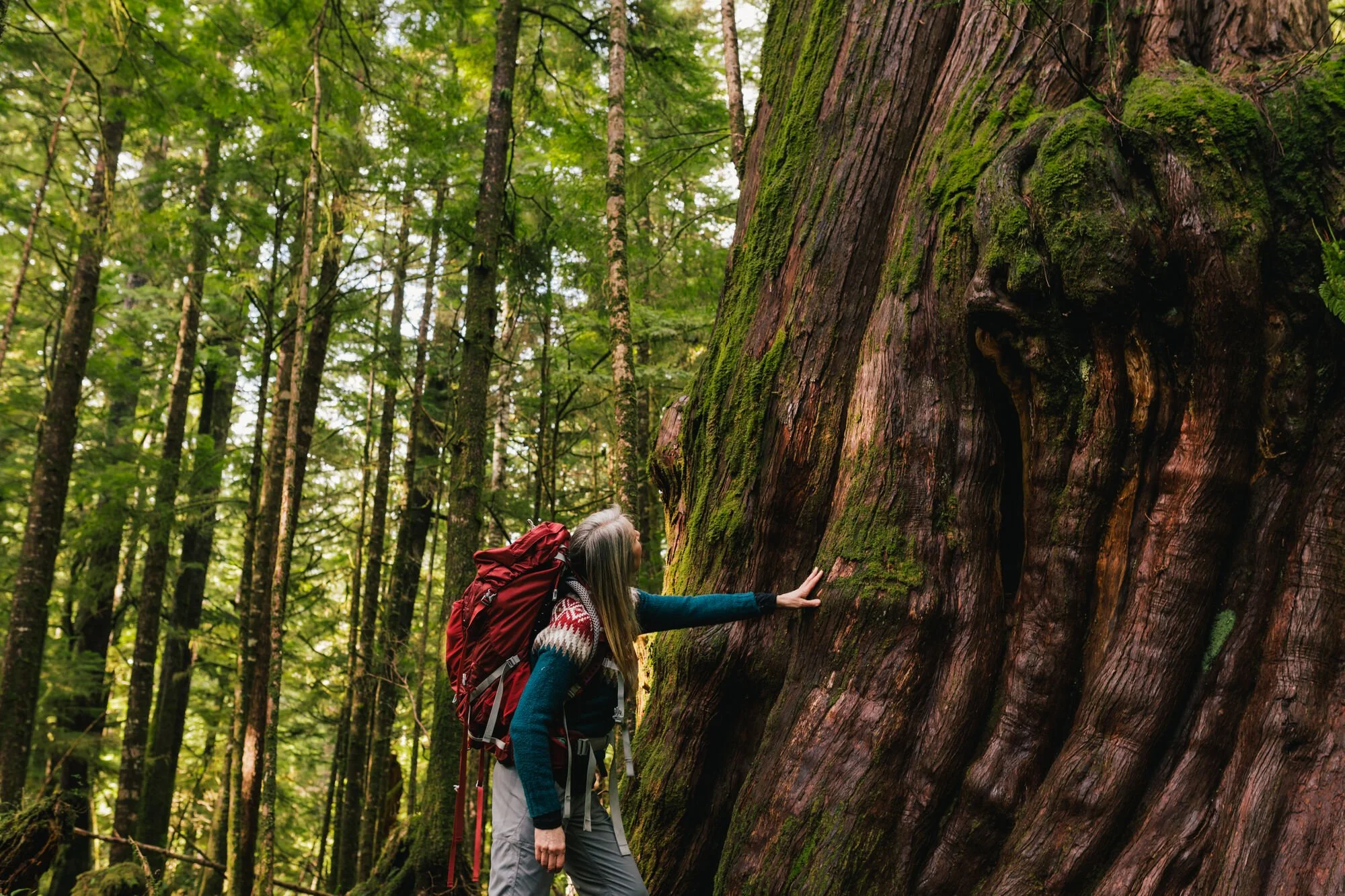
Vancouver Island North
On this International Women’s Day, perhaps the invitation is simple: not only to celebrate women who succeed within tourism in conventional ways, but to learn from the ways women inherently practice regeneration in their daily lives. To design tourism systems that reflect those rhythms.
To honour leadership that values reciprocity, patience, and renewal.
This is where I think the conversation begins to intersect with regeneration. Regeneration is not simply about sustainability or doing less harm. It is about understanding and working within cycles. Living systems renew themselves through phases of growth, rest, decay, and renewal. A forest cannot remain in perpetual growth; it must move through disturbance and recovery. Rivers require floodplains to release pressure.
“But regeneration is not only gentle work. Like women themselves, expressions of femininity are not limited to softness or care. There is a wildness within them as well, a force that protects, disrupts, and redraws boundaries when systems fall out of balance.”
Agricultural systems depend on fallow periods to restore soil health. Every living ecosystem survives because it understands rhythm.
Regenerative tourism asks us to think about destinations in the same way. Communities cannot absorb unlimited growth without pause and landscapes cannot host constant visitation without restoration. Cultural systems cannot sustain themselves if stories are continuously extracted without reciprocity. Our industry is slowly shedding this linear approach to tourism planning that focuses on marketing research, infrastructure needs, and the privilege of the visitor over the resident. We are seeing amazing strides within the regenerative process and tourism. Regeneration asks us to move with the natural pulse of a place.
Ecologists describe these patterns through what is known as adaptive cycles: phases of growth, consolidation, disturbance, and renewal that allow ecosystems to evolve and remain resilient over time.
Systems theorists refer to the broader structure of these cycles as panarchy, a concept developed by ecologist C. S. Holling (albeit a man, but we won't hold him against that in this article). Panarchy explains how complex systems move through nested cycles of stability and transformation. Periods of growth eventually create rigidity. Disturbance releases that rigidity, opening space for renewal and innovation.
Women often understand cycles not as abstract theory but as lived experience. Biological rhythms, caregiving seasons, emotional tides within communities, and the responsibilities of maintaining social cohesion cultivate a deep awareness of timing and change. These rhythms teach patience, anticipation, and responsiveness. They teach when something is ready to emerge and when it still needs care.
This lived experience fosters a form of leadership that reads signals differently. In regenerative tourism, this expertise becomes incredibly significant. Development decisions rarely fail because of a lack of ideas. They can fail because of timing: because we build before communities are ready, expand before ecosystems recover, or prioritize urgency over relationships.
Women’s cyclical awareness, shaped by lived rhythms of care, adaptation, and renewal, can help rebalance this pattern. It introduces a leadership style that is attentive to thresholds, relational dynamics, and the subtle signals of a system under stress.
In regenerative tourism conversations, we often emphasize the relational qualities women bring to leadership: listening, intuition, collaboration, and care. These capacities are essential. They are what allow destinations to heal, communities to rebuild trust, and partnerships to grow over time. They slow conversations down long enough for deeper understanding to emerge.
But regeneration is not only gentle work. Like women themselves, expressions of femininity are not limited to softness or care. There is a wildness within them as well, a force that protects, disrupts, and redraws boundaries when systems fall out of balance.
Regeneration, like femininity, is shaped by multiple forces working in tension. Some nurture renewal, others provoke necessary change. Both are essential, and both carry equal power.
Yet ecosystems regenerate through disturbance as well as renewal. Expanding from the softer description above, so too does a fire need to clear forest underbrush so new growth can take root. A storm will reshape coastlines and redistribute nutrients. Rivers flood and redraw their banks. What may appear destructive in the moment is often the mechanism through which balance is restored.
The raw side of femininity lives within this same dynamic. It is the capacity not only to nurture systems, but also to protect them when they are pushed beyond their limits.

Orca in Blackfish Sound
In tourism development, this force can show up in quiet but decisive ways: the willingness to say no when growth begins to resemble extraction, the courage to protect a watershed when investment pressure mounts, the resolve to hold a boundary when culture risks being commodified, or the discernment to walk away from partnerships that compromise integrity.
This is not aggression (though women are sometimes called that…), it is guardianship.
Across cultures, women have often carried protective roles for land, language, and community. Within tourism development, that protective instinct can manifest as stewardship: leaders questioning projects that exceed ecological capacity, insisting that Indigenous consent and voice come before storytelling, or slowing infrastructure plans until housing and community impacts are understood. Sometimes it appears in something as simple (and as powerful) as someone in a boardroom saying, with conviction, “This does not feel right for this place, let's consider this from multiple angles”.
Actions like these can easily be interpreted as resistance to growth. From a regenerative perspective, however, they represent a deeper form of system intelligence. They acknowledge that thriving destinations depend not only on nurturing opportunity, but also on safeguarding the ecological, cultural, and social systems that make those opportunities possible in the first place.
If tourism begins to embrace this cyclical perspective, the outcomes start to look different. Destinations learn when to rest rather than constantly expand. Communities feel heard before tensions escalate into conflict. Businesses grow in ways that are sustainable rather than extractive, reducing burnout for both people and place. Visitors are invited not simply to consume a destination, but to care for it.
Regeneration is not just a framework or strategy; it is a rhythm, and women have been keeping that rhythm long before our industry learned to name it.
“If tourism begins to embrace this cyclical perspective, the outcomes start to look different. Destinations learn when to rest rather than constantly expand. Communities feel heard before tensions escalate into conflict.”
